
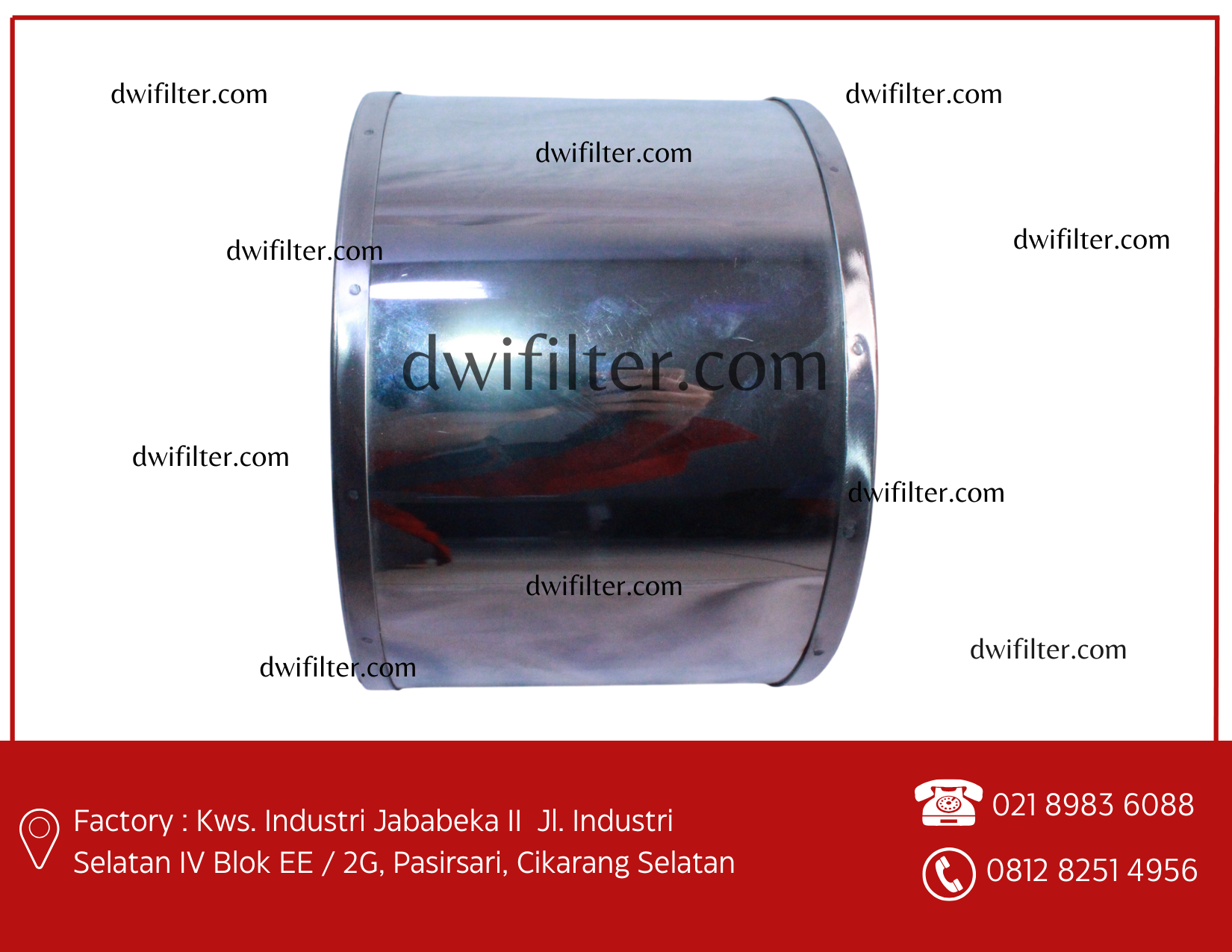
Description
COMPRESSED AIR AND GAS FILTER ELEMENT
Compressed Air and Gas Element Filters: Benefits, Types, Applications, Recommended Use, and How to Use Them
Compressed air and gas play a crucial role in a variety of industrial and commercial applications. However, the air and gas produced by compressors often contain contaminants such as dust particles, oil, water, and microorganisms. These contaminants can damage equipment using the compressed air or gas, disrupt production efficiency, and even contaminate the final product. Therefore, the use of compressed air and gas element filters is crucial to ensure the quality of the air and gas used.
Benefits of Using Compressed Air and Gas Element Filters
The use of compressed air and gas element filters offers a variety of significant benefits, including:
✔Equipment Protection: Removing contaminants such as particles and oils prevents damage to pneumatic equipment, actuators, valves, and other sensitive equipment, extends their service life, and reduces maintenance costs.
✔Increased Efficiency: Clean air and gas result in more optimal equipment performance. By eliminating obstructions and maintaining internal cleanliness, filters help improve efficiency and reduce energy consumption.
✔Better Product Quality: In industries such as food, pharmaceutical, and electronics, the use of clean compressed air and gas is crucial to prevent product contamination and ensure high end-product quality.
✔Occupational Safety and Health: Removing contaminants such as microorganisms and harmful particles from compressed air helps create a safer and healthier work environment for workers.
Types of Compressed Air and Gas Element Filters
Various types of element filters are available, each designed to remove a specific type of contaminant. Some common types of element filters include:
1. Particulate Filters: These filters remove solid particles such as dust, dirt, and rust. They are available in various filtration levels, from coarse to very fine filtration.
2. Coalescent Filters: These filters remove oil and water in aerosol form by combining small particles into larger droplets, making them easier to separate.
3. Adsorption Filters: These filters use adsorbent materials such as activated carbon to remove oil vapors, odors, and certain gases from compressed air.
4. Sterile Filters: These filters remove microorganisms such as bacteria and fungi, ensuring sterile compressed air and gases for sensitive applications.
Compressed Air and Gas Element Filter Applications
Compressed air and gas element filters are used in a wide range of industrial and commercial applications, including:
✅Manufacturing Industry: Used in pneumatic systems, welding equipment, robotics, and other automation applications.
✅Food and Beverage Industry: Used in packaging, bottle blowing, and food processing.
✅Pharmaceutical Industry: Used in pharmaceutical production, bottle filling, and drying.
✅Electronics Industry: Used in chip production, testing, and cleaning.
✅Medical: Used in respirators, surgical equipment, and other medical applications.
Recommended Use of Compressed Air and Gas Element Filters
To ensure optimal performance and long service life, follow these recommended uses:
1. Select the appropriate filter: Select the correct type of element filter based on the type and level of contaminants to be removed and the application requirements.
2. Replace the filter regularly: Follow the manufacturer’s recommendations for replacing the element filter regularly. The replacement interval depends on the filter type, the quality of the incoming air, and the level of use.
3. Inspect and clean the system: Inspect the compressed air and gas system regularly for leaks or other problems that could affect filter performance. Clean the system regularly to prevent contaminant buildup.
4. Use a pre-filter: Consider using a pre-filter to remove large particles and extend the life of the main filter.
How to Use Compressed Air and Gas Element Filters
How to use compressed air and gas element filters varies depending on the type and model of filter. However, in general, the following steps can be followed:
1. Turn off the system: Make sure the compressed air and gas system is turned off and the pressure has been relieved.
2. Remove the filter housing: Remove the filter housing from the air or gas line.
3. Remove the old filter element: Remove the old filter element from the housing.
4. Clean the filter housing: Clean the filter housing with a clean cloth and a suitable solvent.
5. Install the new filter element: Install the new filter element into the filter housing. Make sure the filter is installed correctly and tightly.
6. Reinstall the filter housing: Reinstall the filter housing into the air or gas line.
7. Turn on the system: Turn on the compressed air and gas system and check for leaks.
By understanding the benefits, types, applications, recommended uses, and how to use compressed air and gas element filters, users can ensure optimal air and gas quality, protect equipment, improve efficiency, and maintain the quality of the final product. Investing in the right filtration system is a smart long-term investment.
Whatever your filter needs, please contact us to get the best solution.
PT.DWI FILTER JAYA
Factory: Jababeka Industrial Estate Phase 2 Block EE/2G Jl. South Industrial IV, Pasirsari Subdistrict
, South Cikarang District, Bekasi, West Java 17530
Whatsapp: 0812 8251 4956
Phone: (021) 8983 6088
E-Mail: Dwi.Filter@Ymail.Com / Info@Dwifilter.Com


Reviews
There are no reviews yet.